How I Create Hand-Felted Pine Trees: A Slow Fiber Art Process
Posted by Emily Bradley, Artist Altitude Artworx on Apr 8th 2026
There’s something quiet about the beginning of a tree.
Before it becomes part of a landscape, before it holds a story, each hand-felted pine tree begins as simple materials—flat pieces of wool felt, cut by hand in a range of natural greens. No two are ever exactly alike, much like the trees they are inspired by in nature.
From Wool Felt to Form
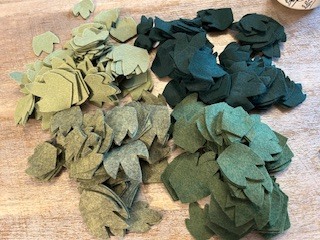 The process of creating these needle felted trees starts at the most foundational level: the branch.
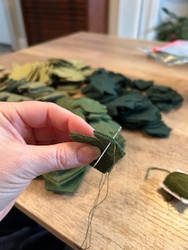
For each branch, I cut two pieces of felt. These are carefully stitched together, then embroidered to add subtle texture and movement—details that bring life into the form. Once stitched, each branch is gently stuffed, giving it structure while maintaining the soft, organic quality that wool is known for.
Three of these branches are then combined to form a single layer.
Building Structure, Layer by Layer
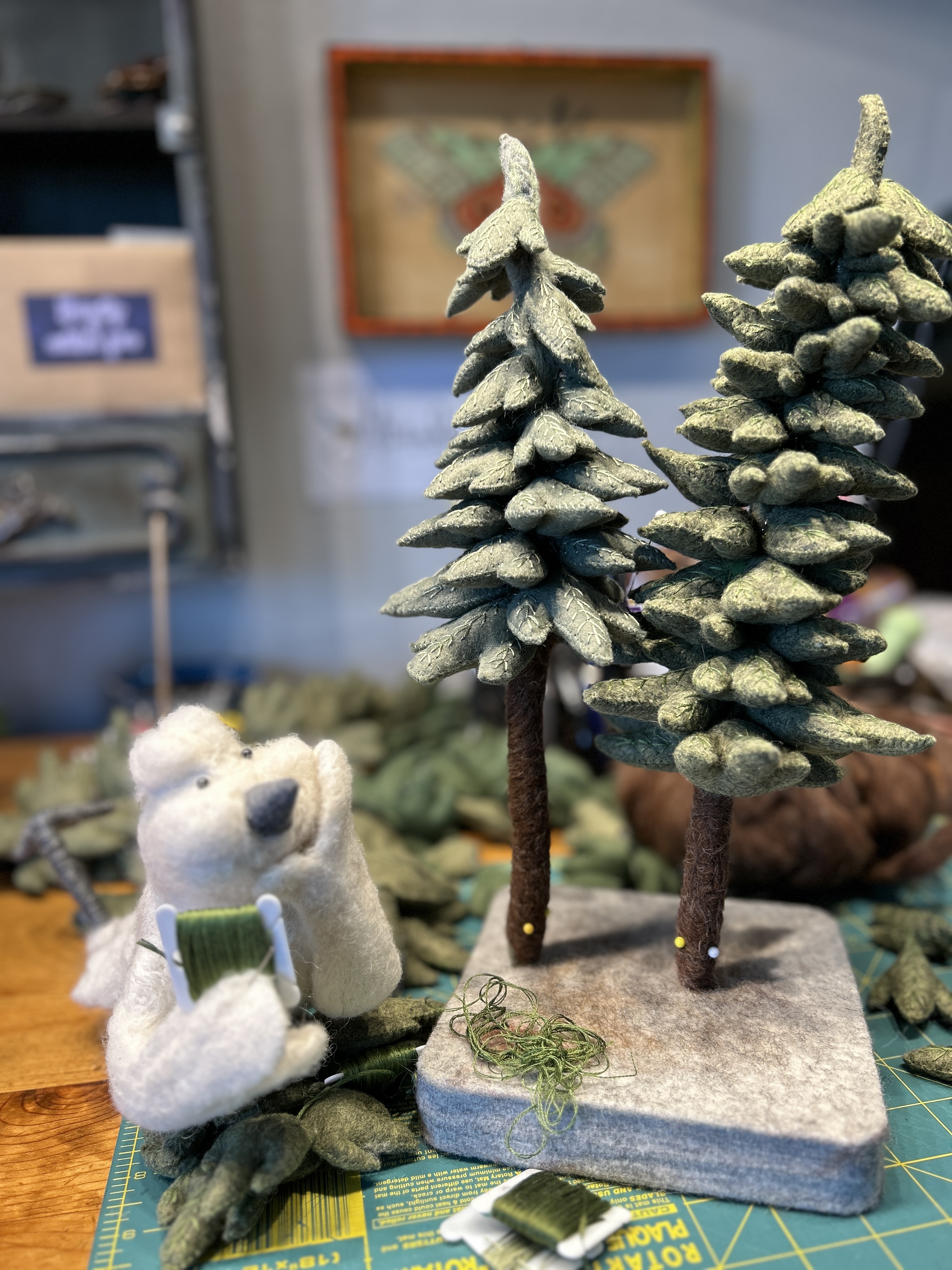 From there, the tree begins to take shape.
Each layer is stacked onto a central core, gradually building upward. This layered construction method allows the tree to grow naturally, echoing the way branches form in real evergreens. The result is a three-dimensional felt sculpture that feels both structured and soft—rooted yet alive.
What begins as separate components slowly becomes something whole.
The Art of Slow Making
Creating handmade felt trees is a simple process in concept, but one that requires patience and intention. Each step—cutting, stitching, embroidering, assembling—adds depth not only to the piece, but to the story it carries.
This is the essence of slow fiber art: allowing time, material, and process to work together without rush.
And somewhere along the way, almost without noticing, a small forest begins to appear on my table.
Why Handmade Felt Trees Matter
In a world of fast production, these artisan wool felt trees offer something different—connection, craftsmanship, and a sense of place. Each tree is one-of-a-kind, shaped by hand, and designed to be part of a larger story—whether in a seasonal display, a custom heirloom piece, or a woodland-inspired scene.
Thank you for being here to see how they begin.